Choosing the Right Tech Stack: Strategy for Long-Term Success
Choosing the Right Tech Stack: Strategy for Long-Term Success
Don't Let Technology Choices Limit Your Growth or Increase Your Operational Debt.
Selecting the technology stack—the combination of programming languages, frameworks, databases, and servers—is one of the most critical decisions a freelancer or small tech team can make. A hasty choice based solely on current trends or personal preference can lead to high maintenance costs, scalability limitations, and difficulty finding future talent.
A strategic approach ensures that your stack supports your long-term business goals, keeps your team efficient, and allows for manageable operations. Here are the key factors to consider when making your next big technology decision.
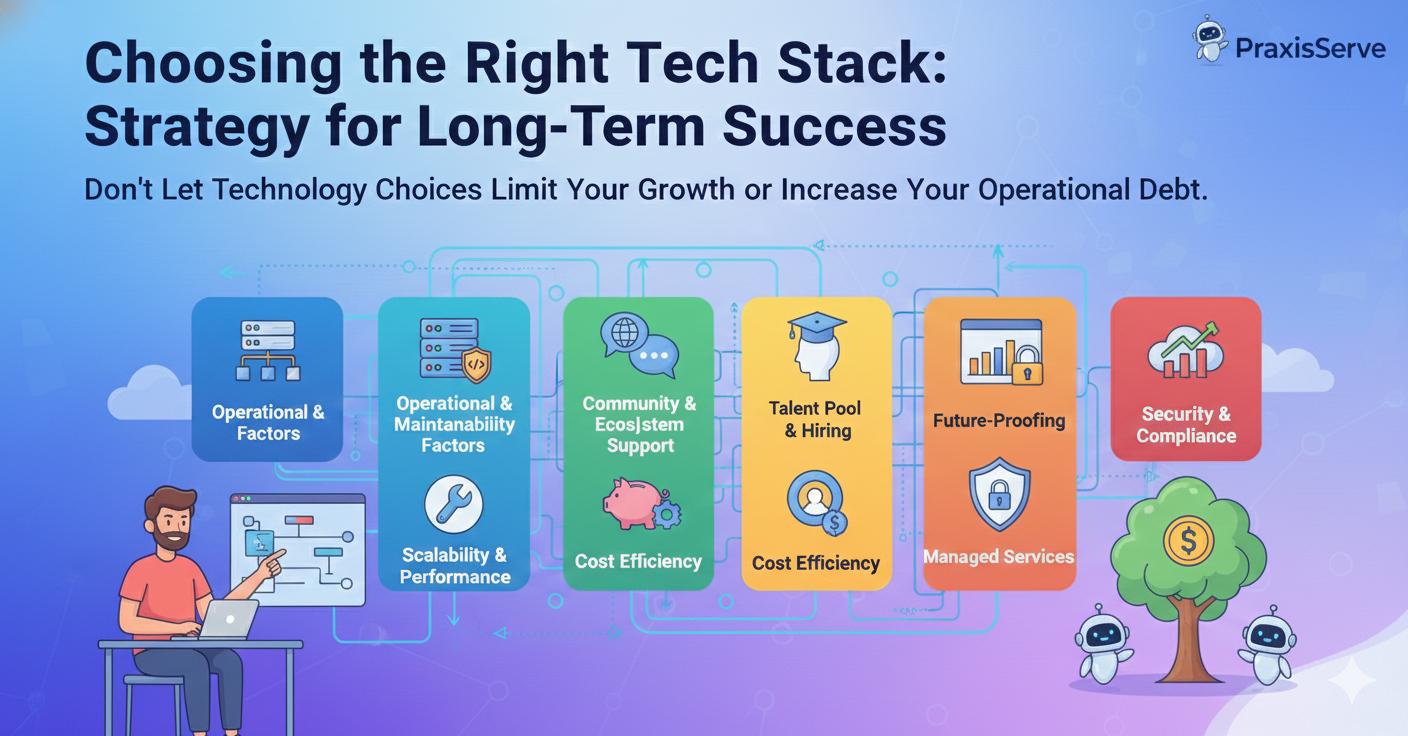
1. Operational & Maintainability Factors
Your ability to maintain and deploy the application (which we help with!) should heavily influence your choice.
- Deployment Complexity: How easily can the stack be containerized (Docker) and integrated into your CI/CD pipeline?
- Monitoring & Logging: Does the technology generate clear, structured logs? Are there standard tools (like Prometheus exporters) available for monitoring?
- Maturity & Stability: For core infrastructure, prioritize mature languages and frameworks (e.g., Python, Node.js, PostgreSQL) that have stable long-term support.
Focus: Choose stacks that minimize technical debt and operational burden.
2. Community & Ecosystem Support
When you encounter a problem (and you will!), strong community support is invaluable for small teams without dedicated specialists.
- Documentation: Is the documentation comprehensive, up-to-date, and easy to understand?
- Open-Source Activity: Is the project actively maintained? A large, active community means faster bug fixes and continuous improvement.
- Third-Party Libraries: Are there plenty of reliable libraries, integrations, and tools available to solve common tasks?
Focus: Don't get stuck using a niche language or framework with sparse support.
3. Scalability and Performance
While premature optimization is a mistake, knowing the limitations of your stack is crucial for long-term growth.
- Concurrency Handling: Does the language or framework handle many simultaneous user requests efficiently (e.g., Node.js vs. Python/Django)?
- Database Choice: Does the database (SQL vs. NoSQL) match your data structure and query patterns? (See our DB guide).
- Cloud Integration: How easily can the service scale horizontally (add more servers/containers)?
Focus: Choose a stack that is "good enough" today but won't require a painful rewrite tomorrow.
4. Talent Pool and Future Hiring
For small teams, every new hire is critical. Their expertise matters.
- Availability of Talent: How easy is it to find developers proficient in this stack in your market?
- Learning Curve: How quickly can a new developer on your team become productive in the chosen stack?
Focus: Avoid stacks that rely on obscure knowledge, making future growth expensive or impossible.
Need Help Designing a Future-Proof Stack?
The right technology stack impacts everything from deployment speed to long-term costs. PraxisServe provides strategic consultation to freelancers and small tech teams, helping you evaluate options based on real-world operational factors.
We don't just recommend tools—we help you build the infrastructure around them, ensuring your chosen stack is fully supported, secure, and ready for growth.
Need Help with This?
Our team is ready to assist you with implementation and support.