Smooth Sailing to the Cloud: Migration Strategies for Small Teams
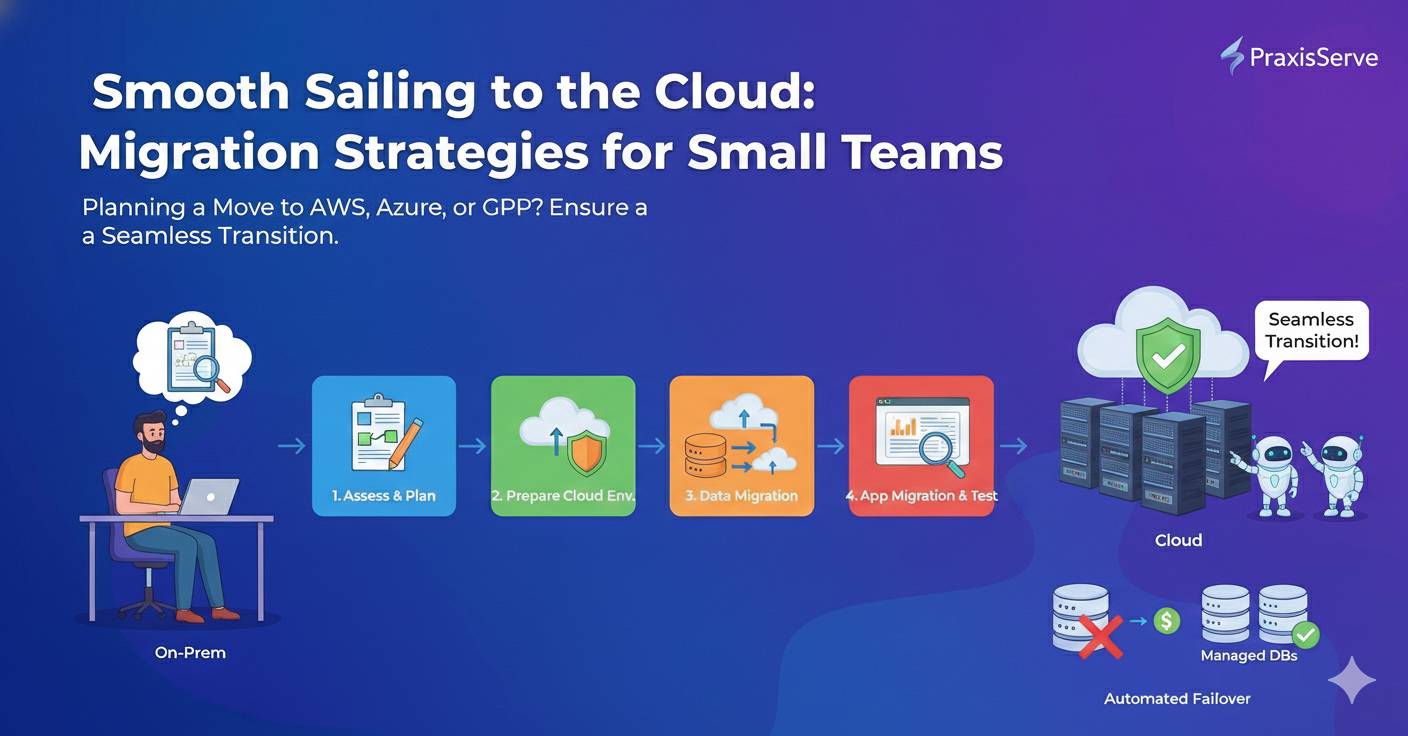
Smooth Sailing to the Cloud: Migration Strategies for Small Teams
Planning a Move to AWS, Azure, or GCP? Ensure a Seamless Transition.
The allure of the cloud—scalability, flexibility, reduced operational burden—is strong. For freelancers and small tech teams, migrating existing applications and infrastructure to cloud platforms like AWS, Azure, or Google Cloud can unlock significant advantages. However, a cloud migration is not just a lift-and-shift operation; it requires careful planning, execution, and often, re-architecting.
A well-defined migration strategy minimizes downtime, reduces risks, and ensures you reap the full benefits of your chosen cloud environment. Let's explore the key steps and considerations for a successful cloud journey.
1. Assess & Plan (The "6 Rs" of Cloud Migration)
Before touching any infrastructure, thoroughly assess your current environment and define your "why." AWS popularized the "6 Rs" which are excellent decision points:
- Rehost (Lift and Shift): Move applications as-is to the cloud (e.g., VMs to EC2). Fastest, but least cloud-optimized.
- Replatform (Lift and Reshape): Move applications to the cloud and make some cloud-native optimizations (e.g., move database to RDS).
- Refactor/Re-architect: Rebuild the application using cloud-native services (e.g., monolith to microservices on containers/serverless). Highest cost/time, but most optimized.
- Repurchase: Move to a SaaS solution (e.g., on-prem CRM to Salesforce).
- Retire: Decommission applications no longer needed.
- Retain: Keep some applications on-premise (e.g., due to regulatory compliance).
Key: Understand your current dependencies, performance needs, and security requirements.
2. Prepare Your Cloud Environment
Set up your target cloud environment correctly from day one.
- Network Setup: Configure VPCs/VNets, subnets, routing, and VPNs/Direct Connect if hybrid.
- Security: Implement robust IAM policies, security groups/firewalls, and encryption at rest and in transit.
- Infrastructure as Code (IaC): Define your cloud infrastructure using tools like Terraform or CloudFormation to ensure consistency and repeatability.
- Monitoring & Logging: Set up cloud-native monitoring (e.g., CloudWatch, Azure Monitor) before migration to track performance and issues.
Benefit: A well-prepared target environment minimizes post-migration issues.
3. Data Migration Strategies
Moving data is often the most challenging part of a migration.
- Offline Migration: For large datasets with tolerance for downtime, transfer data using physical devices (e.g., AWS Snowball).
- Online Migration (Replication): For minimal downtime, replicate your on-premise database to a cloud database service (e.g., DMS for AWS, Azure Database Migration Service).
- Application Data: Sync file storage, object storage, and other application-specific data.
Key: Prioritize data integrity and minimize downtime during data transfer.
4. Application Migration & Testing
Once your data is in place, migrate your applications and rigorously test them.
- Phased Migration: Migrate non-critical components first, then more complex services.
- Thorough Testing: Conduct unit tests, integration tests, performance tests, and user acceptance testing (UAT) in the cloud environment.
- Rollback Plan: Always have a clear plan to revert to your on-premise environment if unforeseen issues arise during cutover.
- Traffic Cutover: Use DNS changes (e.g., Route 53) to gradually shift traffic to the new cloud environment (e.g., blue/green deployments).
Benefit: Ensures functionality, performance, and a smooth user experience.
5. Post-Migration Optimization
Migration isn't the end; it's the beginning of cloud optimization.
- Cost Optimization: Continuously monitor and optimize cloud costs (as discussed in our guide). Right-size instances, leverage savings plans.
- Performance Tuning: Fine-tune cloud resources and application configurations for optimal performance.
- Security Review: Conduct regular security audits of your cloud environment.
- Decommission Old Resources: Once confident, safely decommission your old on-premise infrastructure to avoid redundant costs.
Benefit: Realize the full potential and cost savings of your cloud investment.
Ready to Migrate? PraxisServe Makes it Effortless.
Cloud migration can be a complex undertaking, especially for small teams managing multiple projects. PraxisServe offers expert cloud migration services, guiding you through every step of the process.
From initial assessment and strategy development to seamless data transfer, application migration, and post-migration optimization, we ensure your move to the cloud is smooth, secure, and cost-effective. Let us build your future in the cloud.
Need Help with This?
Our team is ready to assist you with implementation and support.